
H195/L100/W50
1,225,000 UZS
Factory shelving comes in standard sizes and is assembled from parts: you can take it apart, move it, extend a run and add accessories, and its load capacity is covered by a warranty. Workshop-made shelving is built to fit one exact spot, but it is usually a single welded frame: moving it, extending it or fitting ready-made accessories is hard, and its load capacity has usually never been tested. For shops and warehouses factory shelving is usually more practical; for an unusual space there is also custom-size shelving.
| Factory shelving | Workshop-welded | |
|---|---|---|
| Size | A range of ready sizes | Any |
| Assembly | From parts, no welding — in a day | Usually welded, one piece |
| Moving and extending | Comes apart; a run grows with a new section | Needs cutting or re-welding |
| Accessories | Price-tag holders, stoppers, back panels — made to fit | Each one made separately |
| Paint | Factory-painted, colour of your choice | Depends on the workshop |
| Load capacity | Stated on the warranty card | Often unknown |
| Price | An open price for every size | By negotiation |
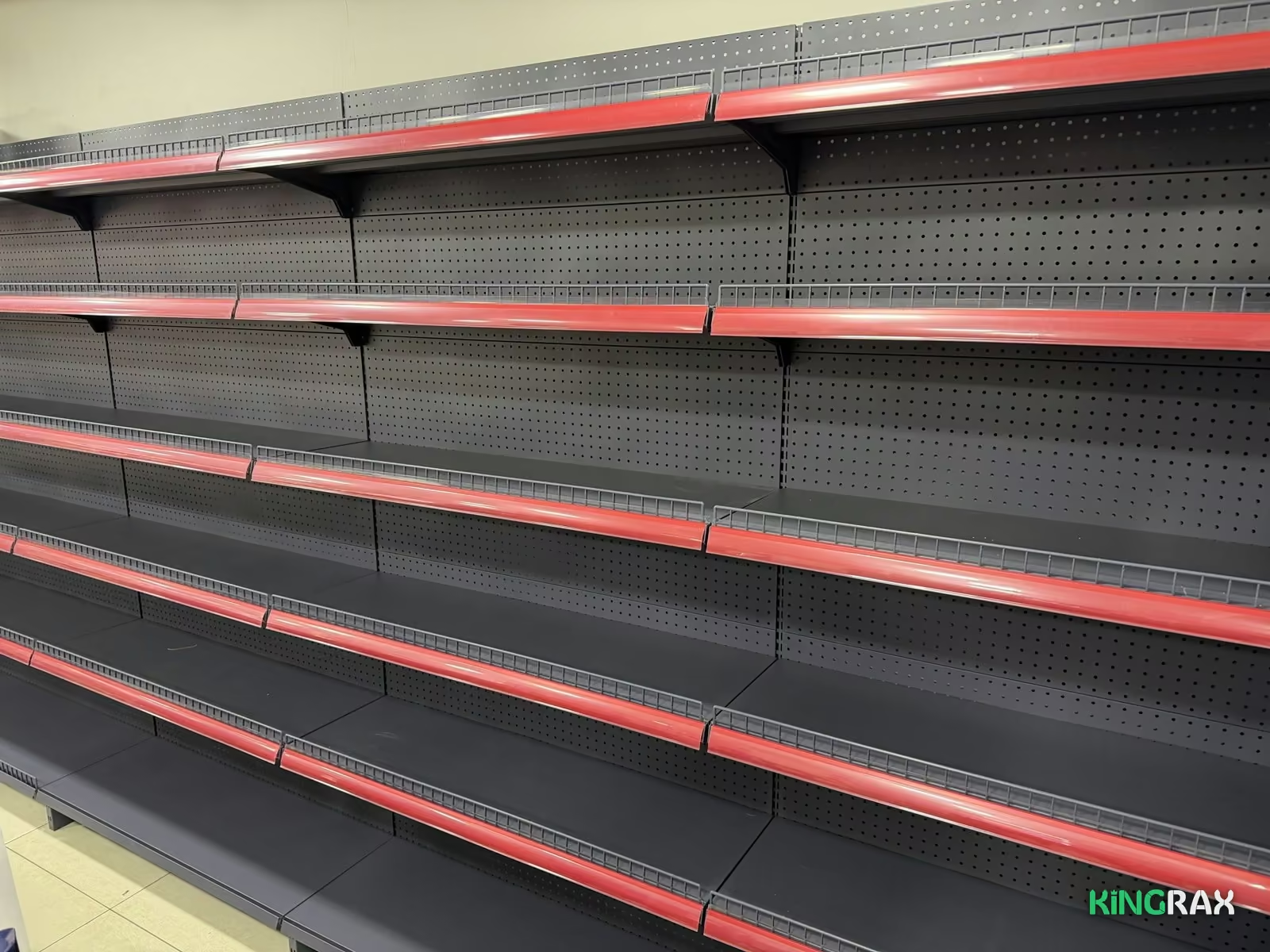
Factory shelving is made of uprights, shelves, back panels and fixings. Shelves hook into the holes of the uprights, so you can move them up or down to suit the goods. Parts of one system fit together: for example, the 35/30 and 40/35 systems have different shelf depths, but within one system every size joins the others in a run.
Workshop shelving is usually welded from steel angle or box section. It can be strong, but the shelves stay at the height where they were welded. If the shop moves or the sales floor is rearranged, it cannot be taken apart.
Even for an unusual space, check the ready sizes first: wall shelving comes from 50 to 120 cm long, so short sections can fill a lot. If no size fits, KingRax also makes custom-size shelving.
Compare offers on one measure — the price of 1 metre of run — and check what is included:
Prices for every size are in the price list.
Questions without answers are a warning sign: if heavy goods go on shelving whose load nobody has tested, it can bend or tip over. Safety rules are in a separate guide. Looking at second-hand shelving? Read new or used shelving.
For shops and warehouses factory shelving is usually more practical: it is easy to move, extend and add accessories to, and its load capacity is under warranty. Workshop-welded shelving makes sense only for a truly unusual space. Send us your room size — with a free 2D/3D project we will work out the same day which ready sizes fit and what they cost.


Enter the length of a wall or a row to see which shelving fits and what it costs. You can also get a rough layout from the room size.


