

H195/L100/W50
1,225,000 UZS
Shelving falls into two groups: retail shelving displays goods to shoppers on the sales floor, and warehouse shelving stores boxes and stock. Retail shelving comes in four types — wall, double-sided (island), inner corner and end cap — which differ by where they stand on the floor. Warehouse shelving is divided by load: light, medium and heavy duty.
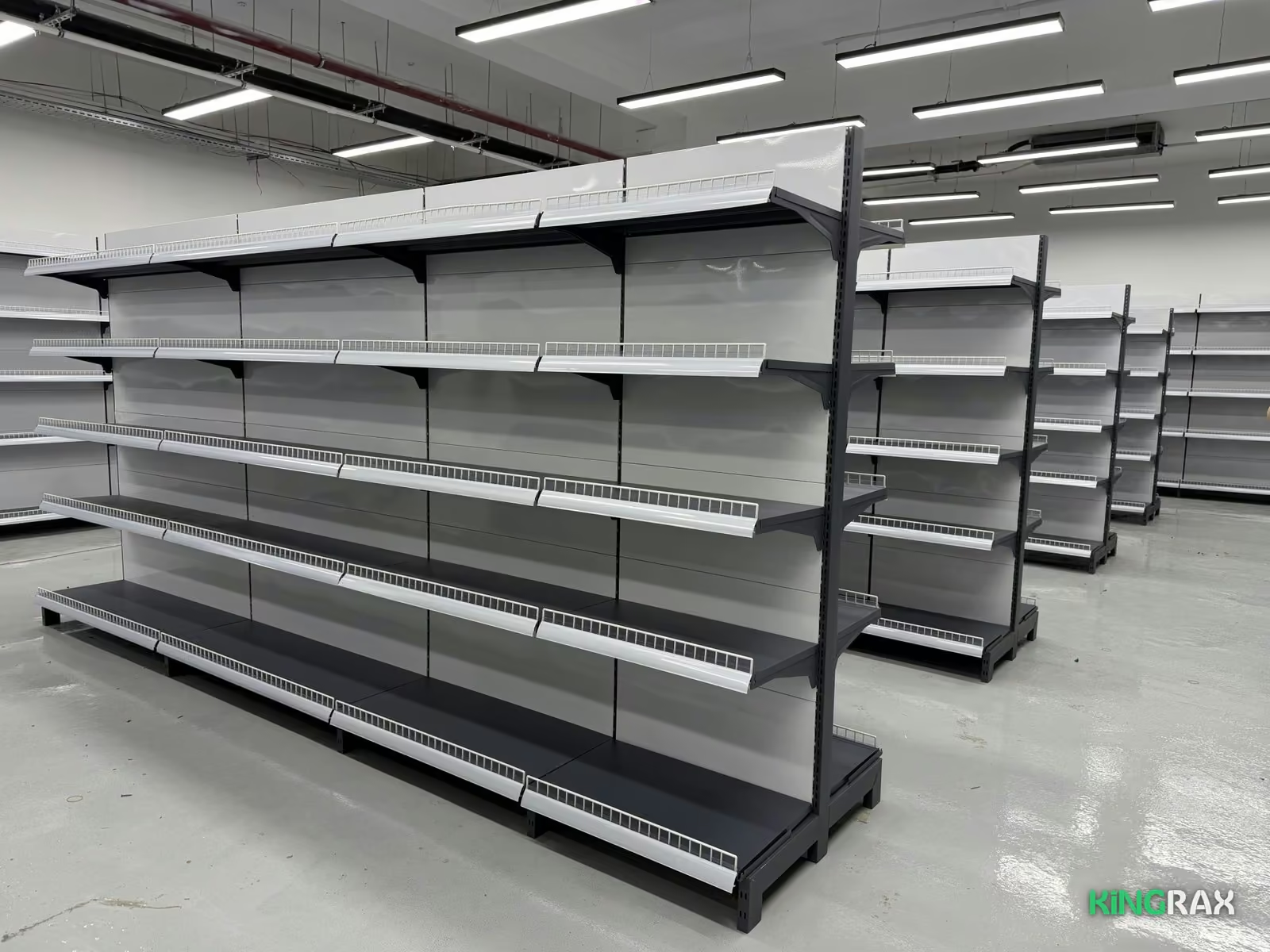
| Type | Where it is used | H, cm | L, cm |
|---|---|---|---|
| Wall | Along the walls of the floor | 135–225 | 50–120 |
| [Double-sided (island)](/en/metal-shelving/retail-shelving/double-sided-shelving/) | In the middle, in rows | 135–195 | 50–120 |
| Inner corner | Where wall rows meet in a corner | 135–225 | 70–75 along each wall |
| End cap | At the end of a double-sided row | Same as the row | 70 or 90 |
| Light duty | Shop stockroom, garage, archive | 200 | 120, 150, 200 |
| Medium duty | Retail and wholesale warehouse, workshop | 200, 250, 300 | 120, 150, 200 |
| Heavy duty | Warehouse, workshop, spare parts | 200 | 120, 150, 200 |
| Home and office | Home, office, archive | 180, 200 | 100, 120 |
H is height, L is length. Every size of every type is listed with its price in the shelving price list. Load capacity: a retail shelf takes up to 50–80 kg and a light- or medium-duty warehouse level up to 75–300 kg, depending on the system and length: 15 shelving questions.
Retail shelving is metal shelving for displaying goods on the sales floor. It is divided into four types by where it stands, and one shop usually uses several of them together.
Wall shelving is single-sided retail shelving: its back stands against the wall and goods are placed from the front. It forms the main row of goods along the walls and is found in almost every shop: grocery stores, pharmacies, cosmetics and household-goods shops. In a small shop the middle of the floor stays free as the aisle, so often only wall shelving is used. Height from 135 to 225 cm, length from 50 to 120 cm; 4–5 shelves including the bottom one.
Double-sided (island, gondola) shelving is retail shelving for the middle of the floor: it stands in rows and goods are placed on both sides, with two shelves on each level. Grocery stores, minimarkets and supermarkets build their aisles from these rows. Height from 135 to 195 cm — lower than wall shelving. How wide the aisles between rows should be: store aisle width.
Inner corner shelving is retail shelving for the corner where two wall rows meet. It joins the rows without a gap and leaves no empty corner: the shelf is 90 cm deep and takes 70–75 cm along each wall. Any shop whose wall shelving meets in a corner needs it; its height matches the wall shelving.
End cap shelving is retail shelving at the end of a double-sided row. It is the spot a shopper sees before entering the aisle, so supermarkets and minimarkets put promotions, new and seasonal goods here. Length 70 or 90 cm, height the same as its row.
Warehouse shelving is metal shelving for storing boxes and goods in warehouses, stockrooms, garages and workshops. It has no back panels; each level is a front and a back beam with shelves on top. Neighbouring bays in a row share one upright. The types differ by load.
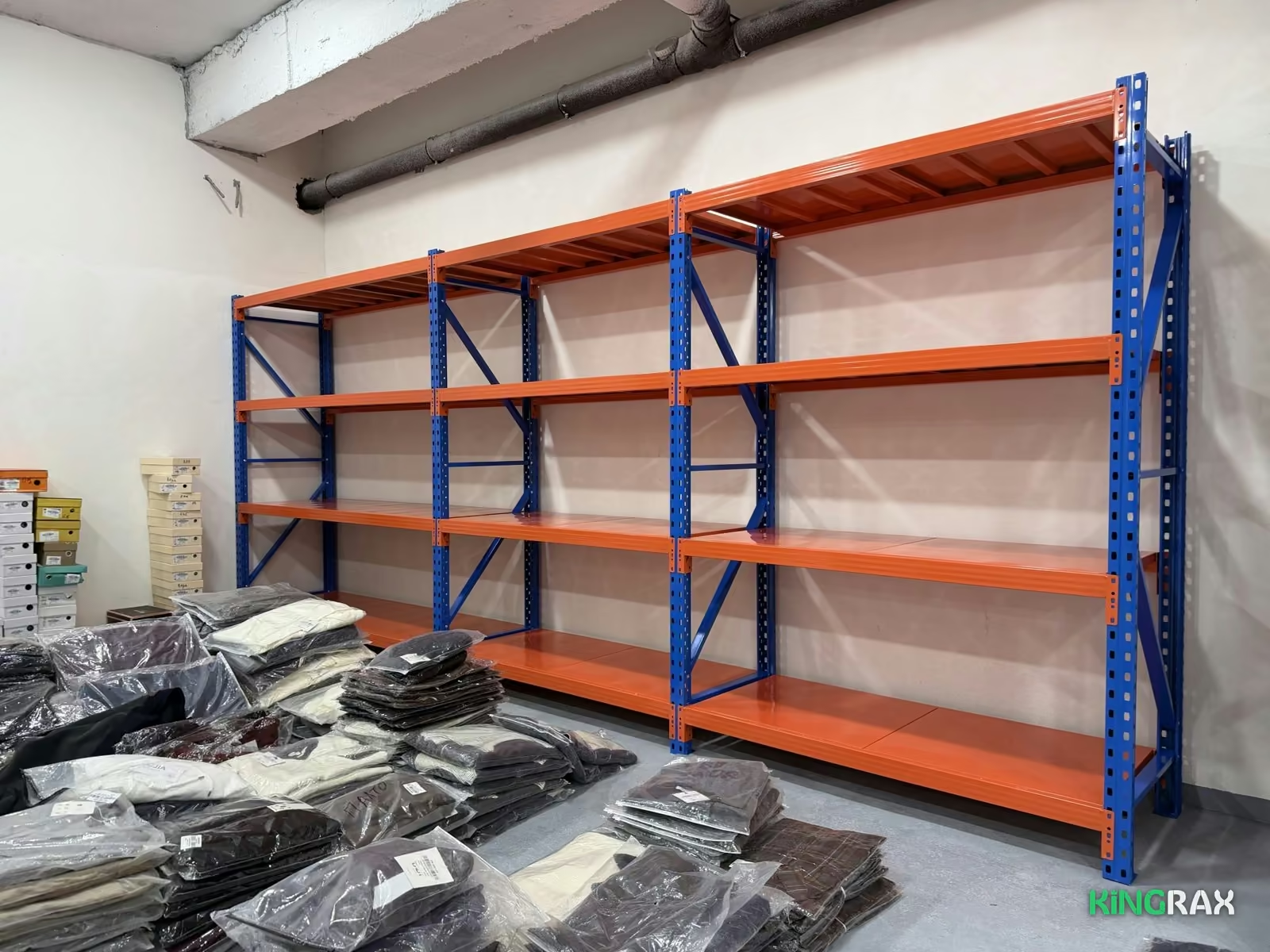
Light-duty shelving is for light boxes and small goods. It suits a shop stockroom, an online-store warehouse, a garage and archive boxes. 200 cm high, 50 cm deep, 4 levels; length 120, 150 or 200 cm.
Medium-duty shelving is for boxes and goods of medium weight. It is used in retail and wholesale warehouses, production workshops and repair shops. 200, 250 or 300 cm high — in a tall warehouse it uses the space almost up to the ceiling; 60 cm deep, 4 levels; length 120, 150 or 200 cm.
Heavy-duty shelving is sturdy shelving for heavy boxes, spare parts and raw materials. It suits warehouses, production workshops and auto-parts stores. 200 cm high, 60 cm deep, 4 levels; length 120, 150 or 200 cm. How to choose: choosing warehouse shelving.
Home and office shelving is narrow metal shelving for the home, the office, an archive or a small storeroom: 180 or 200 cm high, 100 or 120 cm long, 30 or 40 cm wide. Fruit and vegetable shelving means stands and racks for displaying fruit and vegetables in shops and markets.
These types are used mainly in large warehouses, logistics centres and production. KingRax does not sell them.
For a sales floor — retail shelving: first wall shelving along the walls, then, if the floor is wide enough, double-sided rows in the middle, inner corner units in the corners and end caps at the ends of rows. For a room where goods are stored — warehouse shelving, chosen by load. The difference in detail: retail or warehouse shelving, steps to choose: choosing shop shelving, terms: what is shelving.
Send us the size of your shop or warehouse, and in a free 2D/3D project we will show which type fits where.


Enter the length of a wall or a row to see which shelving fits and what it costs. You can also get a rough layout from the room size.
