

H195/L100/W50
1,225,000 UZS
A kitchenware shop sells three kinds of goods: fragile glass and china, heavy pots and sets, and small hanging utensils. Fragile goods go on the middle shelves with a stopper in front, heavy goods at the bottom, small items on hooks.
| Goods | Where | Price |
|---|---|---|
| Glass, china, ceramics | Middle shelves, a stopper on every shelf | 12,000 UZS (stopper) |
| Pots, pans, boxed sets | Bottom shelf, 40 cm deep in the 40/35 system | included in the unit price |
| Skimmers, ladles, kitchen tools | A hook on a perforated panel or a hook-rail shelf | 24,000 UZS (hook), 172,000 – 196,000 UZS (shelf) |
| Small items (lids, towels, small dishes) | Slanted mesh-basket shelf | 172,000 – 196,000 UZS |
Prices as of 14 November 2026. All accessories: Shelving Accessories.
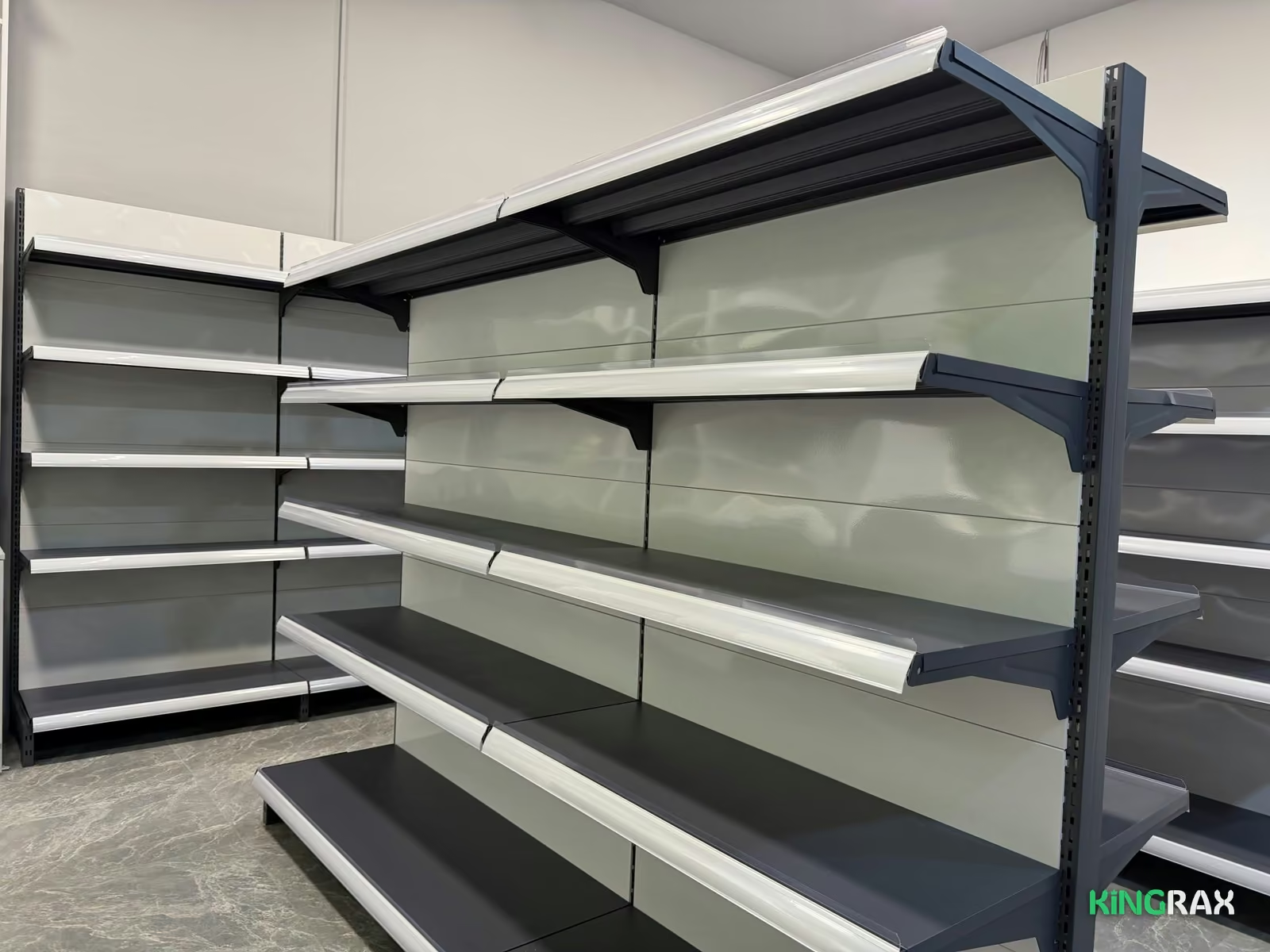
Pots, pans, boxed sets and large cookware go on the bottom shelves. The bottom shelf rests on the upright's foot; in the 40/35 system it is 40 cm deep and the upper shelves 35 cm, so large boxes fit. The difference: 35/30 or 40/35. Never put heavy items on the top shelves.
Kitchen tools and small items look good on hooks, and shoppers take them themselves:
Hooks do not hang on a solid panel. Which panel to use when: Back panel types.
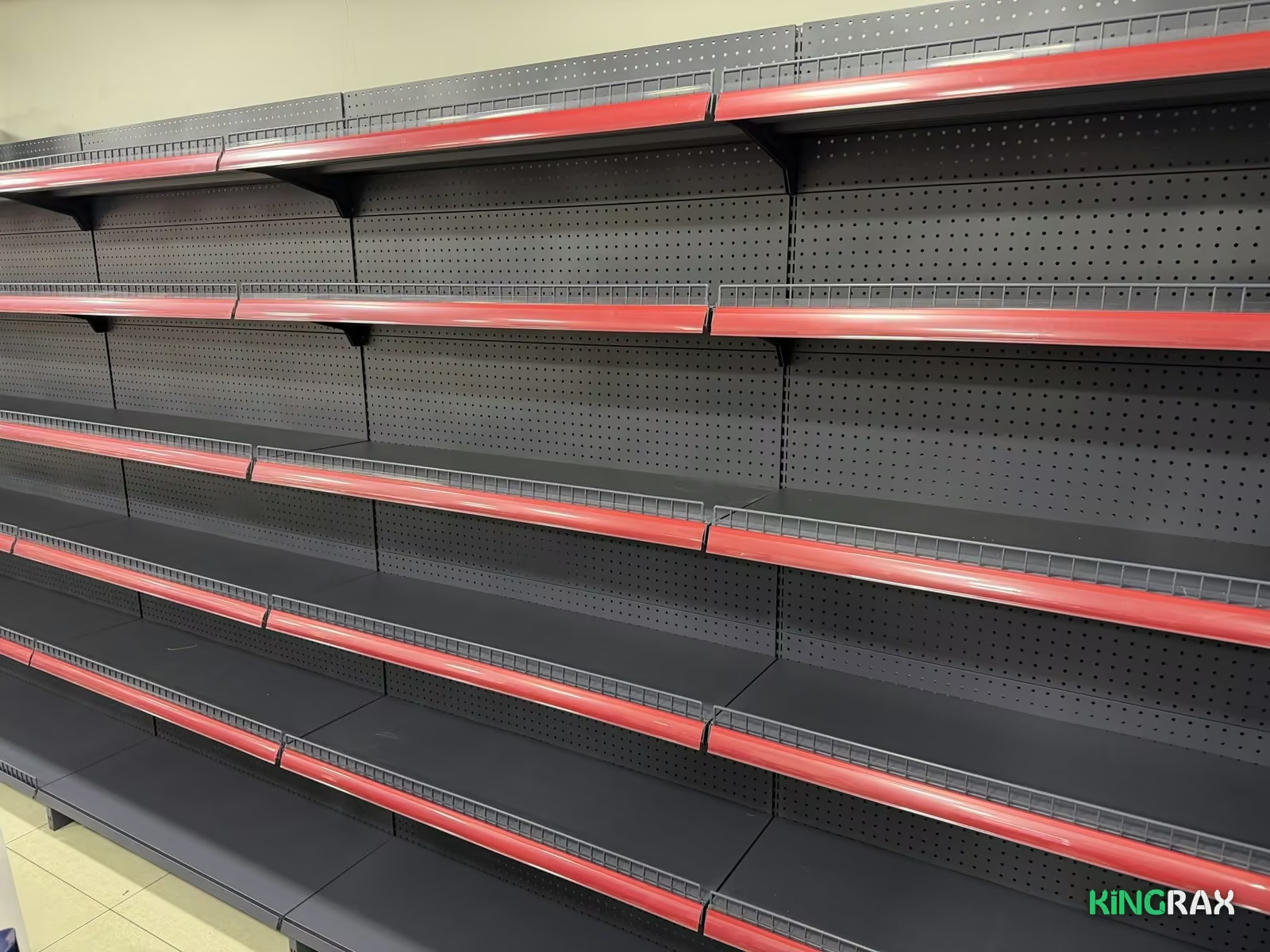
A wall of about 3 metres, 40/35 system:
| Product | Qty | Total, UZS |
|---|---|---|
| Wall Shelving H195/ | 3 | 3,675,000 |
| Single-Sided Upright H195/ | 1 | 184,000 |
| Stopper L100 — one per shelf | 15 | 180,000 |
| Total | 4,039,000 |
Each unit has 5 shelves, 15 in total. Send your shop's size and a manager will prepare a free 2D/3D layout.
In a kitchenware shop, put fragile goods on the middle shelves with stoppers, heavy goods at the bottom and kitchen tools on hooks, and give sets the row ends. Need shelving? Call us or send a request.


Enter the length of a wall or a row to see which shelving fits and what it costs. You can also get a rough layout from the room size.


