

H165/L100/W90
2,205,000 UZS
In a grocery store, goods are placed by shelf level: best sellers at eye and hand level, heavy and large packs at the bottom, light goods at the top. A price holder goes under every product and a stopper in front of round or sliding goods. New stock goes to the back, stock with an earlier best-before date to the front.
| Level | From the floor, approx. | What goes there |
|---|---|---|
| Top shelf | above 160 cm | Light and rarely requested goods |
| Eye level | 120–160 cm | Best sellers and new products |
| Hand level | 80–120 cm | Everyday goods |
| Bottom shelves | up to 80 cm | Heavy and large packs: flour, sugar, water, oil |
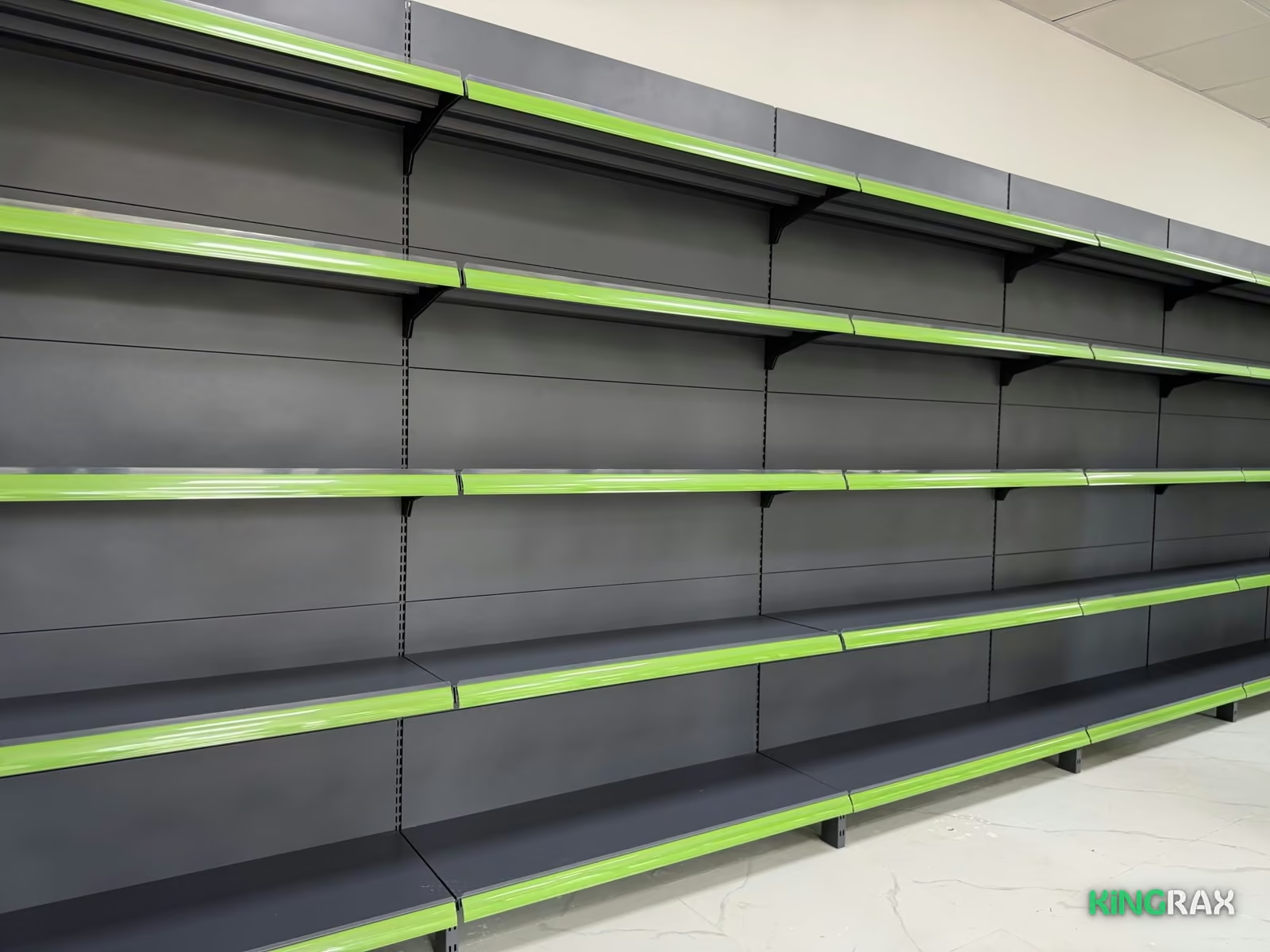
KingRax retail units have 5 shelves each (an H135 unit has 4), and a double-sided unit has the same on each side. Shelves hook into the holes in the uprights, so their height can be changed to suit the goods.
Put newly delivered stock at the back of the shelf and older stock with a closer best-before date at the front. That way goods do not sit until they expire. Check dates every day: nothing past its date should stay on the shelf.
| Product | Qty | Total, UZS |
|---|---|---|
| Double-Sided Shelving H165/ | 1 | 1,960,000 |
| Price holder L100 — one per shelf | 10 | 120,000 |
| Stopper L100 — one per shelf | 10 | 120,000 |
| Total | 2,200,000 |
Prices as of 14 November 2026. A double-sided unit has 5 shelves on each side, 10 in total.
Before stocking shelves, the floor is divided into zones: entrance, checkout, walls and rows in the middle — Store floor zones. Row ends are for offers and seasonal goods: Holiday and seasonal merchandising.
Put best sellers at eye and hand level and heavy goods at the bottom; display categories in blocks and related goods side by side; put new stock at the back and a price holder under every product. Ready-made sets for a grocery store: Shelving for convenience stores. Send your store's size and a manager will prepare a free 2D/3D layout.


Enter the length of a wall or a row to see which shelving fits and what it costs. You can also get a rough layout from the room size.

